
 Buy
Buy Sell
Sell Exchange




Jewellery
Lab Grown Diamond Engagement Ring Guide
Feb
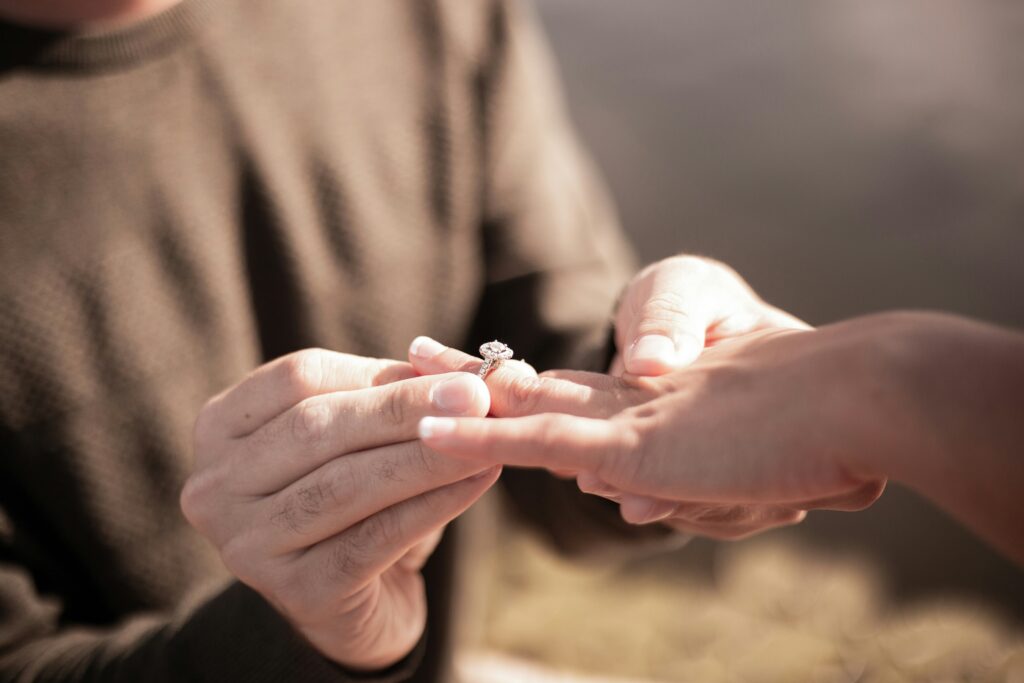
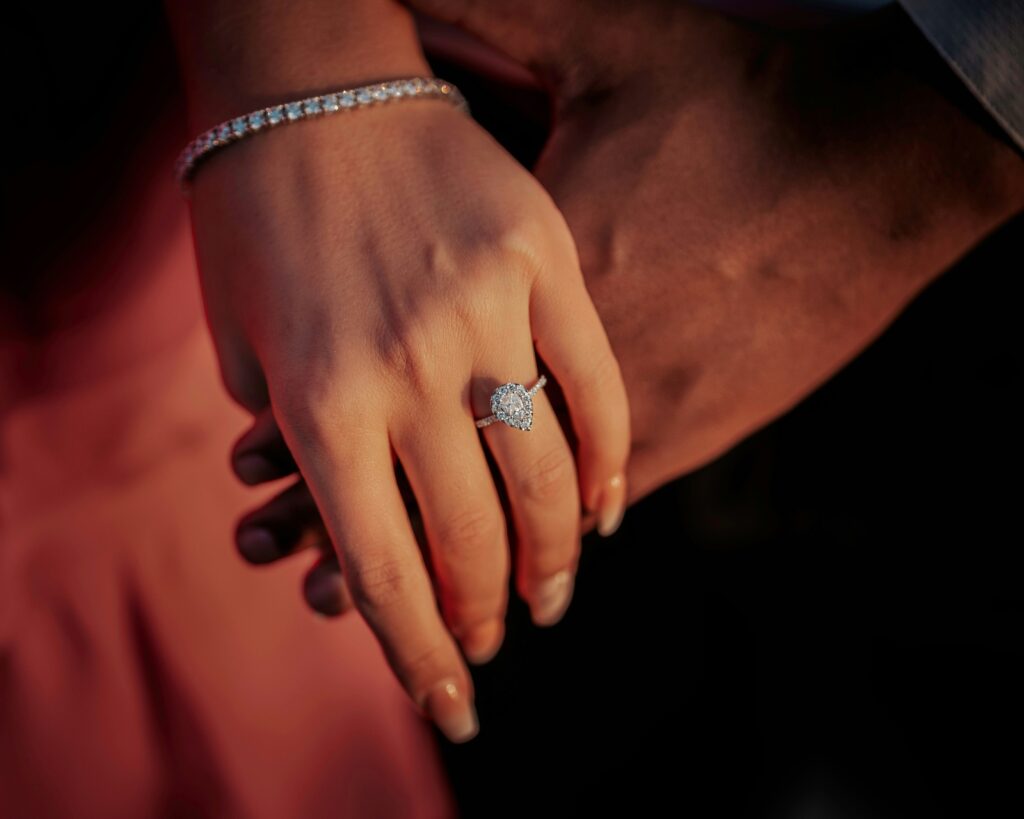
Choosing an engagement ring is one of the most meaningful jewellery decisions a couple will make. It symbolises commitment, shared values and the start of a future together. For modern couples in the UK, lab grown diamond engagement rings are increasingly chosen not as a departure from tradition, but as a contemporary expression of luxury, transparency and thoughtful decision-making.
At Trotters Jewellers, lab grown diamonds are selected for their quality, consistency and craftsmanship. They are real diamonds, chosen because they allow couples to focus on what truly matters: design, wearability and long-term significance. This guide is designed to give you a clear, expert understanding of lab grown diamonds and help you choose an engagement ring with confidence.
What Is a Lab Grown Diamond?
A lab grown diamond is a genuine diamond created using advanced technology that replicates the natural conditions under which diamonds form. Chemically, physically and optically, lab grown diamonds are identical to mined diamonds. They share the same hardness, brilliance and durability.
Lab grown diamonds are produced using techniques such as High Pressure High Temperature (HPHT) or Chemical Vapour Deposition (CVD). These controlled processes allow for exceptional consistency and precision during growth. Once cut and polished, lab grown diamonds cannot be distinguished from natural diamonds without specialised equipment.
Trotters Top Tip: A diamond’s beauty is defined by how it is cut and finished, not by where it was formed. Always assess a lab grown diamond by the same standards as a mined diamond.
Why Modern Couples Are Choosing Lab Grown Diamonds
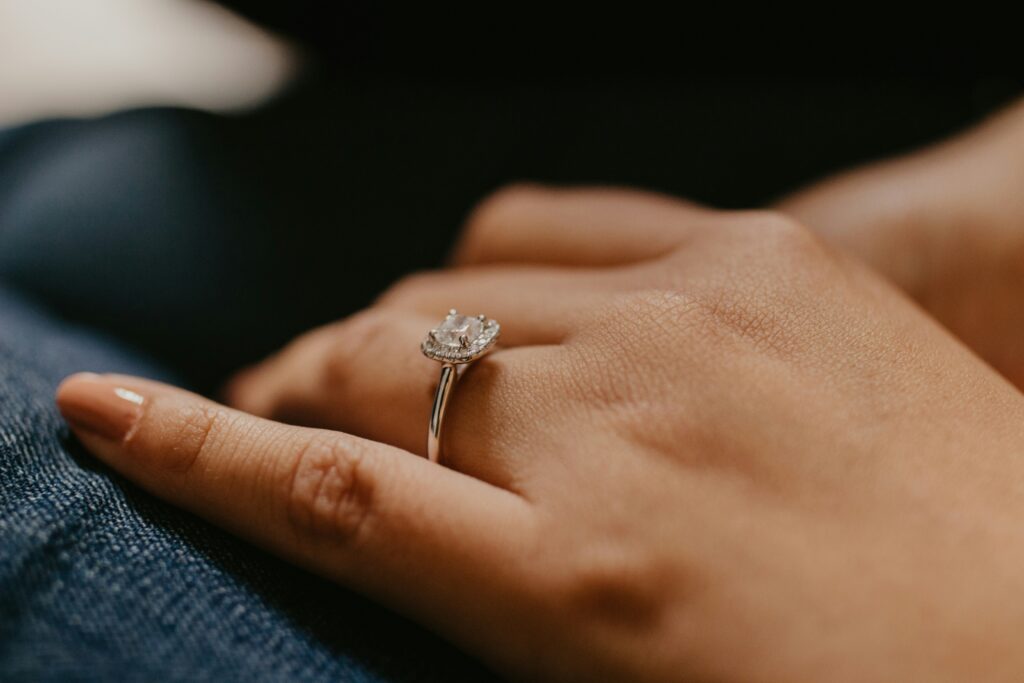
Lab grown diamonds reflect how many couples now approach luxury purchases. The appeal lies in clarity of origin, consistent quality and a modern mindset, without sacrificing craftsmanship or longevity.
Many couples choose lab grown engagement rings because they:
- Offer full transparency around origin and certification
- Provide excellent consistency in cut and clarity
- Align with ethical and contemporary values
- Allow greater focus on ring design and proportions
Rather than feeling like a compromise, lab grown diamonds are often a deliberate choice that allows couples to invest in craftsmanship and personal style.
Explore engagement ring designs that reflect a modern approach to fine jewellery at Trotters.
Lab Grown vs Natural Diamonds: A Clear Comparison
From a scientific perspective, lab grown and natural diamonds are the same material. The distinction lies in origin and traceability, not in appearance or performance.
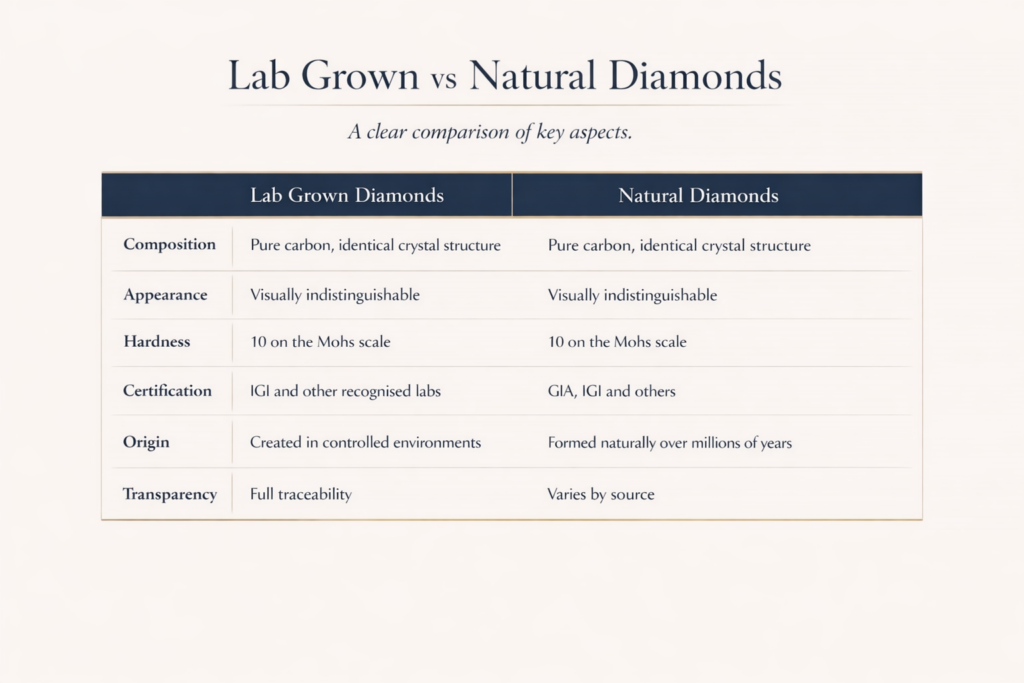
For engagement rings, both options deliver the same durability and brilliance. The choice is best viewed as a personal one, shaped by values and preferences rather than quality differences.
Trotters Top Tip: When comparing diamonds, focus on how the stone performs in light and how it suits the setting, not on origin alone.
Understanding the 4Cs for Lab Grown Engagement Rings
Lab grown diamonds are graded using the same internationally recognised standards as mined diamonds. Understanding the four Cs helps prioritise what truly matters for an engagement ring worn every day.
Cut
Cut is the single most important factor in how a diamond looks. A well-cut diamond reflects light efficiently, creating brightness and fire.
Trotters Top Tip: If you prioritise one element, make it cut. A slightly smaller diamond with an excellent cut will always appear more impressive than a larger stone with a poor cut.
Colour
Most lab grown diamonds fall within the colourless to near-colourless range, which is ideal for engagement rings. These grades offer a clean appearance that works across all precious metals.
Colour should also be considered alongside metal choice, as yellow or rose gold can complement slightly warmer tones beautifully.
Clarity
Lab grown diamonds often display high clarity due to controlled growth conditions. What matters most is whether inclusions are visible to the naked eye rather than perfection under magnification.
Eye-clean diamonds offer an excellent balance of beauty and value.
Carat
Carat refers to weight rather than visual size. Cut quality, shape and setting all influence how large a diamond appears once worn.
Lab grown diamonds allow couples to focus on balance and proportion, choosing a carat weight that suits the wearer’s hand rather than external expectations.
Choosing the Right Diamond Shape
Diamond shape defines the personality of an engagement ring. Round brilliant cuts are known for maximum sparkle, while oval, emerald and cushion cuts offer distinctive silhouettes.
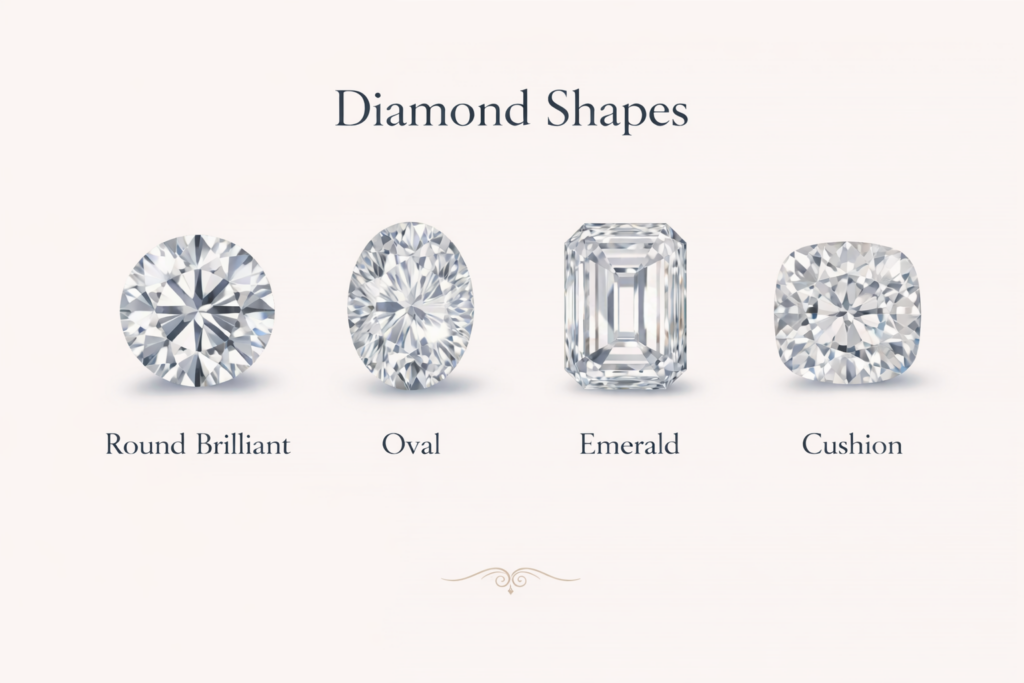
Rather than following trends, consider how the shape complements the wearer’s hand and lifestyle. A shape chosen for personal reasons will remain meaningful long after fashions change.
Ring Settings and Everyday Wear
Engagement rings are worn daily, so the setting must balance beauty with practicality. Solitaire settings highlight the diamond, while halo and more detailed designs add presence.
Comfort, durability and security should always be considered. A ring that catches on clothing or feels fragile can quickly become frustrating.
Trotters Top Tip: If you plan to wear your ring every day, prioritise comfort and security over intricate detailing.
Explore engagement rings with settings designed for daily wear.
Metal Choices for Engagement Rings
Lab grown diamonds pair beautifully with all precious metals.
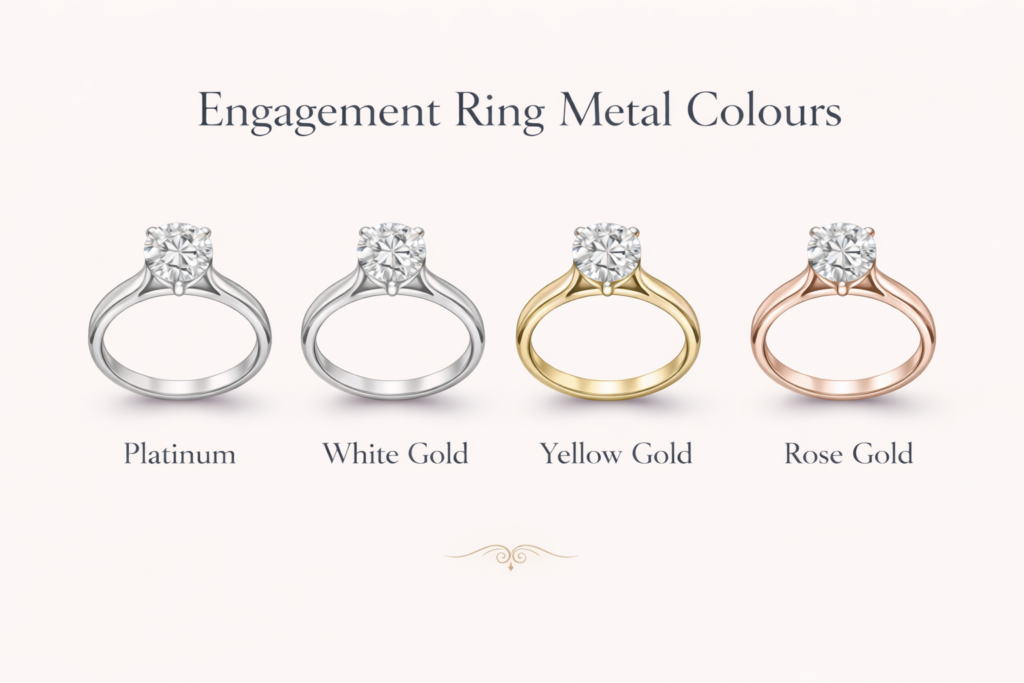
Platinum is valued for durability and its naturally white finish. White gold offers a similar aesthetic with a lighter feel. Yellow and rose gold introduce warmth and character, often chosen for a more traditional or romantic style.
Metal choice should reflect lifestyle and personal preference rather than perceived rules.
Ring Size and Fit for Proposals
Fit is especially important for engagement rings, which are typically worn every day. The ring should feel secure without being restrictive and allow for natural movement.
Professional sizing is recommended where possible, particularly for diamond-set designs. For surprise proposals, choosing a slightly larger size often allows for greater flexibility.
If you would like guidance on sizing for an engagement ring, expert advice can make the process far more straightforward. Check out our extensive Ring Sizing Guide for more advice.
Certification and Long-Term Assurance
Every lab grown diamond engagement ring should be independently certified. IGI certification provides detailed grading information covering cut, colour, clarity and carat weight.
Certification ensures transparency and supports long-term confidence in the diamond’s quality.
Caring for a Lab Grown Diamond Engagement Ring
Lab grown diamonds are as durable as mined diamonds and suitable for everyday wear. Regular cleaning and occasional professional checks help maintain brilliance and ensure settings remain secure.
With proper care, a lab grown diamond engagement ring will last a lifetime.
Lab Grown Engagement Rings at Trotters Jewellers
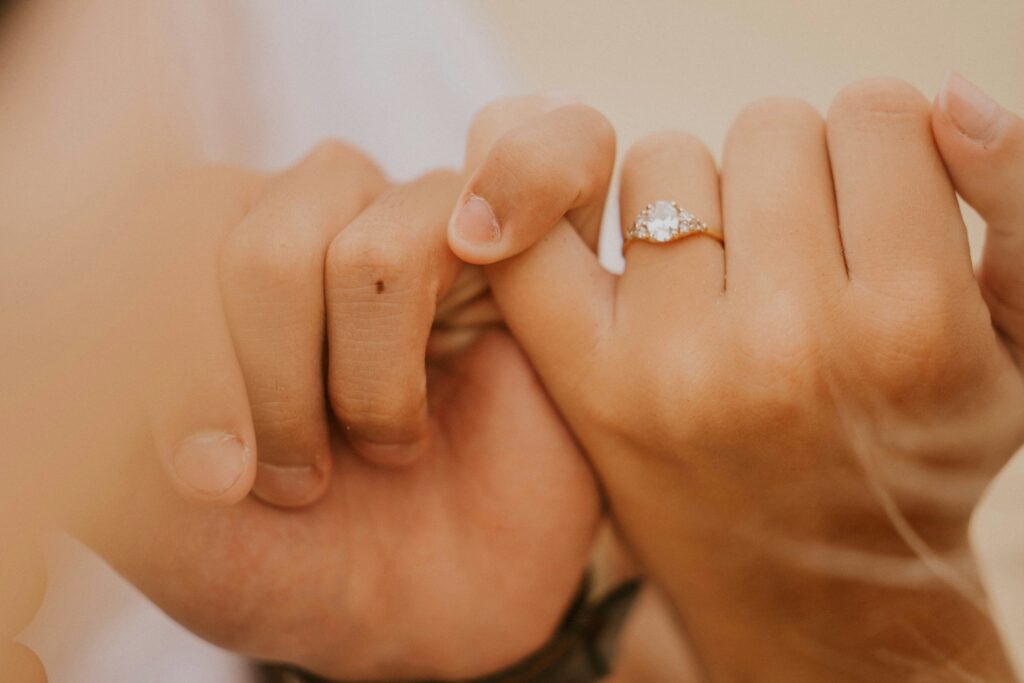
A lab grown diamond engagement ring reflects a modern approach to one of life’s most meaningful moments. It combines beauty, transparency and craftsmanship without compromise. For couples who value thoughtful luxury and long-term wearability, lab grown diamonds offer a confident and contemporary choice.
At Trotters Jewellers, engagement rings are selected with longevity and wearability in mind. Our lab grown diamond rings are chosen for their visual performance, craftsmanship and balance, not just specifications on paper.
Clients benefit from clear, expert guidance throughout the process, from understanding diamond characteristics to choosing a setting that suits daily life. Every ring is designed to feel considered, personal and enduring.
Frequently Asked Questions
Are lab grown diamonds suitable for engagement rings?
Yes. Lab grown diamonds have the same hardness, durability and brilliance as mined diamonds, making them well suited to engagement rings that are worn every day. When set correctly and cared for properly, they are designed to last a lifetime.
Will a lab grown diamond look different from a natural diamond?
No. To the naked eye, lab grown and natural diamonds are visually indistinguishable. Differences can only be identified using specialised gemmological equipment, which is why certification is important for transparency rather than appearance.
Do lab grown diamonds hold their quality over time?
Lab grown diamonds do not change or degrade over time. Their structure is identical to natural diamonds, meaning their brilliance, clarity and strength remain consistent with normal wear and care.
Is IGI certification important for lab grown diamonds?
Yes. IGI certification provides independent verification of a lab grown diamond’s cut, colour, clarity and carat weight. This ensures clarity around quality and gives buyers confidence in what they are purchasing.
Are lab grown diamonds considered a luxury choice?
Increasingly, yes. Many modern couples choose lab grown diamonds because they reflect contemporary values around transparency and responsible sourcing, while still delivering the craftsmanship, beauty and longevity expected from fine jewellery.
About the Author
Written by the Trotters Jewellers team, specialists in luxury watches and certified diamond jewellery since 1991, based in the City of London.