
 Buy
Buy Sell
Sell Exchange





Rolex, Watch Investment
Rolex Datejust 36 vs 41: Which Size Is the Better Buy?
Jan
The Rolex Datejust is one of the most enduring watches ever produced. With its combination of practicality, elegance and variety, it appeals to a wide range of buyers, from first-time owners to experienced collectors. One of the most common decisions buyers face is choosing between the 36 mm and 41 mm versions.
Both sizes share the same DNA and offer the qualities that have defined the Datejust for decades. The real difference lies in how each wears, how it fits into modern collecting preferences and how it suits everyday use over time.
The Datejust: An Enduring Icon
Introduced in 1945, the Datejust was designed as a versatile watch that could be worn daily without feeling purely functional or overly formal. For much of its history, 36 mm was the standard size and became closely associated with the model’s identity.
Larger case sizes were introduced much later, reflecting broader shifts in taste rather than a change in purpose. The Datejust 41 was designed to offer a contemporary option while retaining the familiar proportions and detailing that define the collection.
At Rolex, both sizes are considered core references rather than alternatives, which speaks to their long-term relevance.
The Rolex Datejust 36 mm
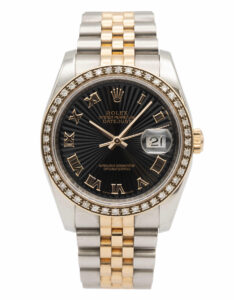
The 36mm at a glance
- Classic proportions rooted in the original Datejust design
- Slim profile that suits a wide range of wrist sizes
- Understated presence suitable for daily and formal wear
The 36 mm Datejust remains the most traditional expression of the model. Its proportions feel balanced and familiar, making it easy to wear in almost any setting. For many collectors, this size represents the purest form of the Datejust.
In recent years, renewed interest in classic sizing has reinforced the appeal of the 36 mm case. It is often chosen by buyers who value subtlety and versatility over visual impact. The watch feels refined rather than attention seeking, which is part of its lasting charm.
From a long-term perspective, the 36 mm Datejust aligns closely with Rolex’s historical design features, a factor that continues to resonate with collectors.
The Rolex Datejust 41 mm
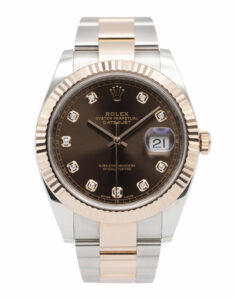
The 41mm at a glance
- Larger dial presence with modern proportions
- Greater wrist presence without excessive thickness
- Familiar Datejust design with a more contemporary feel
The 41 mm Datejust offers a more modern interpretation of the same design. The increased case size provides additional dial space and a stronger visual presence on the wrist, which appeals to buyers accustomed to sports models.
Despite its size, the watch remains balanced and comfortable. The proportions are carefully considered, avoiding the bulk associated with oversized watches. For those with larger wrists or a preference for a more confident aesthetic, the 41 mm Datejust often feels like a natural choice.
It suits buyers who want a watch that feels current while still retaining the refinement expected of the Datejust line.
Wearability and Everyday Use
Both sizes perform well as everyday watches, but they suit slightly different preferences. The 36 mm Datejust tends to disappear on the wrist, offering comfort and discretion throughout the day. It pairs easily with formal clothing and does not dominate the wrist in casual settings.
The 41 mm version feels more noticeable and may suit buyers who enjoy a watch that has presence without crossing into sports watch territory. Comfort remains strong in both cases, but personal wrist size and style play a significant role.
Trying both sizes in person often provides clarity that measurements alone cannot.
Market Demand and Long-Term Appeal
From a market perspective, both the 36 mm and 41 mm Datejust perform consistently. The 36 mm has benefited from a broader return to classic proportions, while the 41 mm continues to attract buyers seeking a modern everyday Rolex.
Neither size can be described as clearly outperforming the other. Demand remains steady for both, and long-term value tends to be influenced more by condition, dial configuration and metal choice than by case size alone.
This stability is one of the reasons the Datejust remains such a popular entry point into Rolex ownership.
Which Size Makes Sense for Different Buyers
Choosing between 36 mm and 41 mm is ultimately a personal decision. Buyers drawn to understated design and historical continuity often favour the smaller case. Those who prefer a contemporary look with greater visual impact tend to lean toward the larger option.
It is also worth considering how the watch will be worn. Daily use, professional environments and long-term comfort should all factor into the decision.
Trotters Top Tip: The best choice is the one that feels right on your wrist. A watch you enjoy wearing regularly will always hold more value to you over time.
Is One Size a Better Investment?
The Datejust has never been about rapid appreciation. Its strength lies in consistency, recognition and long-term desirability. Both sizes benefit from this reputation.
Rather than focusing on case size as an investment factor, buyers are better served by prioritising condition, originality and a configuration they genuinely enjoy. These elements tend to matter more over time than size alone.
Why Buy a Datejust from Trotters?
At Trotters Jewellers, we offer a carefully curated selection of pre-owned Rolex Datejust watches in both 36 mm and 41 mm sizes. Each watch is inspected for condition, originality and authenticity before being offered for sale.
Our team provides clear, practical guidance to help buyers understand the differences between sizes and configurations. Every watch is supplied with a 12 month warranty for added peace of mind.
About the Author
Written by the Trotters Jewellers team, specialists in luxury watches and certified diamond jewellery since 1991, based in the City of London.