
 Buy
Buy Sell
Sell Exchange





Jewellery
What Size Diamond Stud Earrings Should You Choose?
Aug
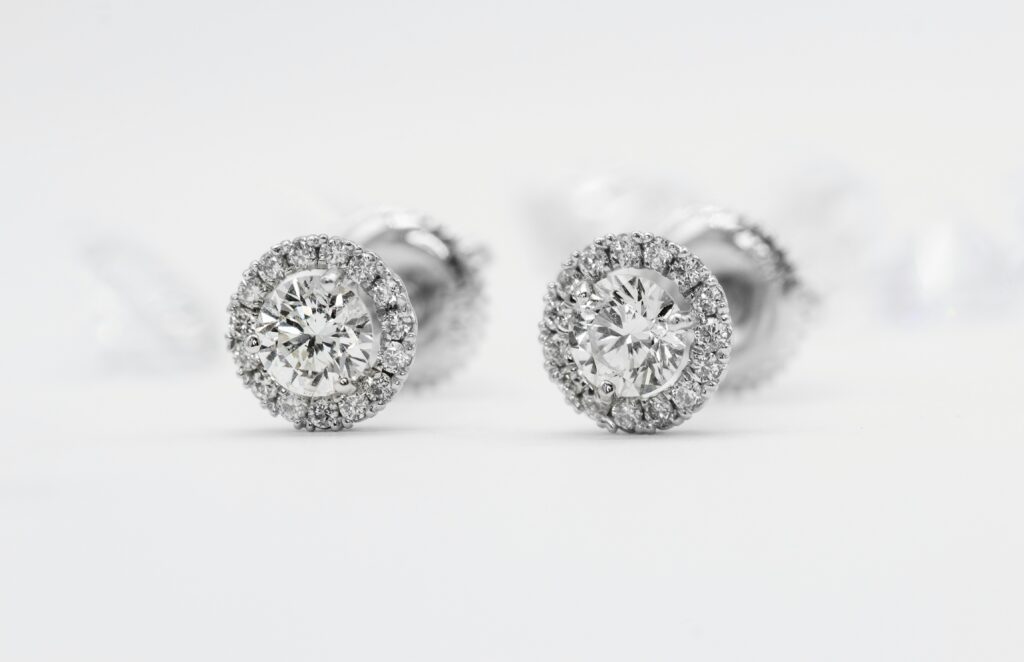
Diamond stud earrings can look completely different depending on their size. A smaller pair can add subtle sparkle that works effortlessly every day, while larger diamonds create considerably more presence without losing the simplicity that makes studs so timeless.
So, what size should you choose?
There’s no single perfect carat weight for diamond studs. Your choice should reflect how noticeable you want the earrings to be, how often they’ll be worn and your budget. It’s also important to understand how earring carat weights are described, as the number you see doesn’t always refer to the size of each individual diamond.
At Trotters Jewellers, our collection focuses predominantly on lab-grown diamond earrings, alongside a select number of natural diamond designs. Here’s what to consider when comparing diamond stud sizes.
Understanding Diamond Stud Earring Sizes
Diamond studs are usually compared using carat weight, but there’s an important detail to check before buying.
Earrings are sold as a pair, so retailers may describe them using total carat weight (TCW). This is the combined weight of both diamonds rather than the weight of each individual stone.
For example:
1.00ct total weight = approximately 0.50ct in each ear
2.00ct total weight = approximately 1.00ct in each ear
That distinction makes a considerable difference when you’re trying to picture how large the earrings will look.
Carat is also a measurement of weight, not diameter. Two diamonds with the same carat weight won’t necessarily have identical measurements because their proportions and cut can differ.
When comparing diamond stud earrings, check whether the stated carat weight refers to each diamond or the complete pair and look at the dimensions where they’re available.
Diamond Stud Earring Size Comparison
The right size largely comes down to how much presence you want on the ear.
For round brilliant diamonds, the table below gives a useful indication of how different total carat weights compare. Exact measurements can vary between individual diamonds, so these should be treated as approximate rather than fixed dimensions.
| Total Carat Weight | Approx. Per Ear | Approx. Diameter Per Diamond | Overall Look |
| 0.50ct | 0.25ct | Around 4.1 mm | Delicate and understated |
| 1.00ct | 0.50ct | Around 5.1 mm | Classic everyday size |
| 1.50ct | 0.75ct | Around 5.8 mm | Noticeably more prominent |
| 2.00ct | 1.00ct | Around 6.4–6.5 mm | Strong presence without being oversized |
| 3.00ct | 1.50ct | Around 7.3–7.4 mm | Bold and immediately noticeable |
| 4.00ct | 2.00ct | Around 8.1–8.2 mm | Statement diamond studs |
Why Two Diamonds of the Same Carat Can Look Different
Carat weight is useful when comparing diamond studs, but it doesn’t tell you exactly how large a diamond will appear on the ear.
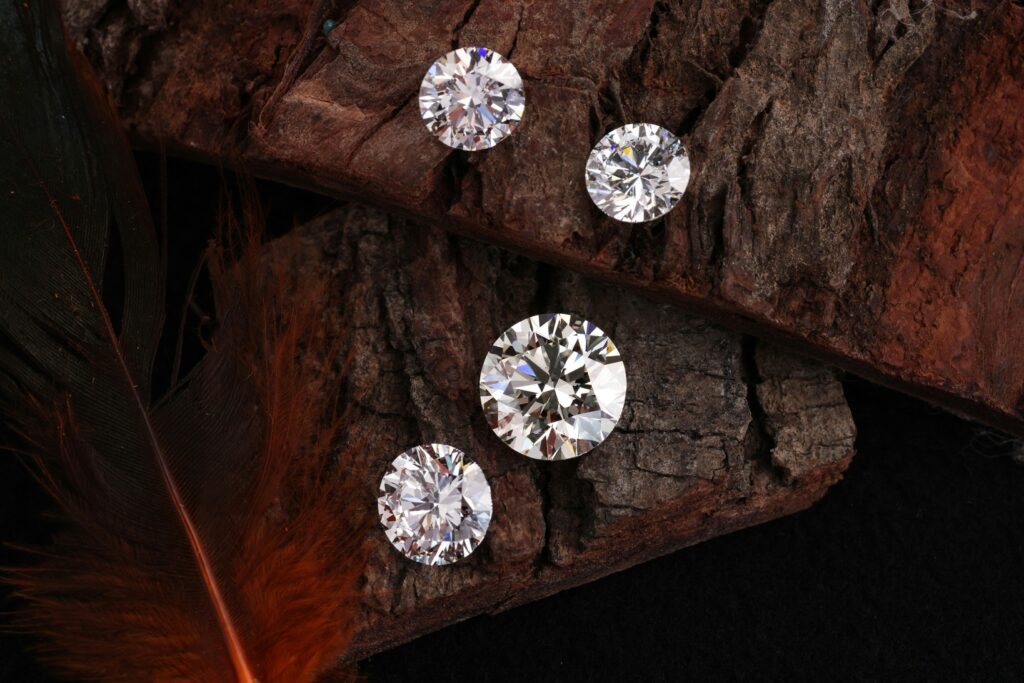
Two 1.00ct diamonds can have slightly different diameters depending on how their weight is distributed. A diamond with more of its weight concentrated in its depth may appear smaller from above than another diamond of the same weight with different proportions.
Cut also matters for another reason: sparkle affects how noticeable a diamond appears.
A well-cut diamond reflects light effectively and can have far more visual impact than its measurements alone suggest. This is why choosing diamond studs purely by chasing the highest possible carat weight isn’t always the best approach.
- Carat weight tells you how much the diamond weighs.
- Dimensions give you a better idea of its physical size.
- Cut influences how effectively it handles light.
- Setting affects how much of the diamond remains visible.
For earrings, you also have two diamonds sitting side by side visually, so matching matters. A good pair should feel balanced rather than having noticeable differences between the stones.
Does Ear Size Affect Which Diamond Studs Look Best?
The same pair of diamond studs won’t look identical on everyone. The size and shape of the earlobe, the position of the piercing and even the other earrings someone wears can all influence how large a diamond appears.
Smaller earlobes can make modest diamonds look surprisingly prominent, while larger earlobes may comfortably accommodate bigger stones without them feeling oversized.
Piercing position matters too. If the piercing sits particularly low on the lobe, very large or heavy studs may not sit as neatly as a smaller pair.
Rather than trying to find a strict carat weight based on ear size, use the size guide as a starting point and consider the proportions when the earrings are actually worn. If you’re deciding between two sizes, seeing them in person can make the choice considerably easier.
Lab-Grown or Natural Diamond Stud Earrings?
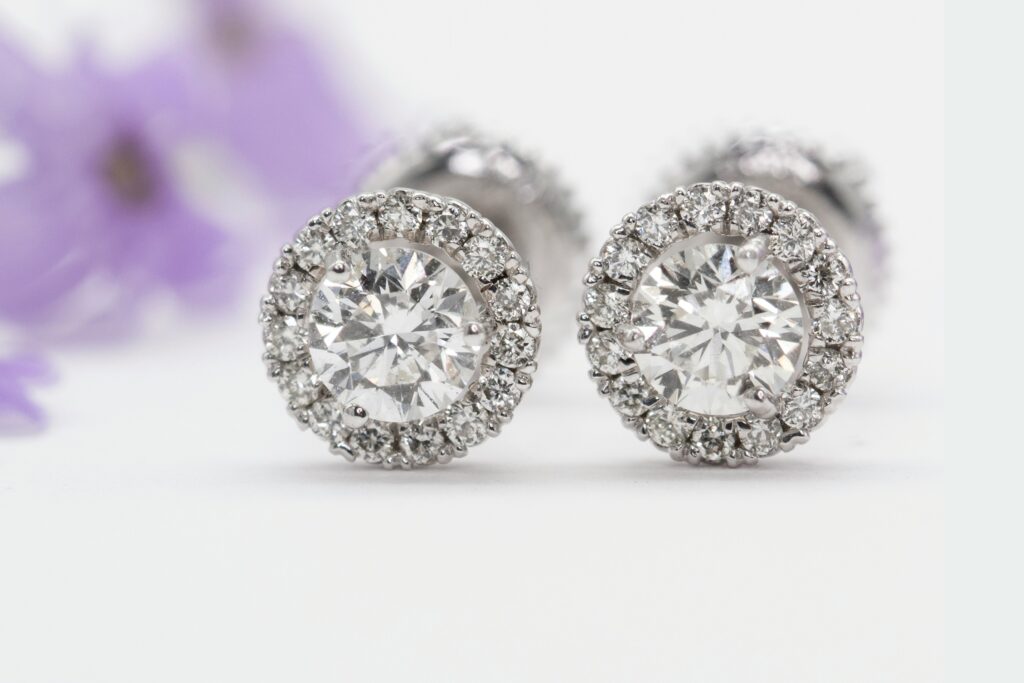
Trotters offers both, although our diamond earring collection predominantly features lab-grown diamond earrings.
For studs, lab-grown diamonds can be particularly appealing because you’re buying two closely matched stones rather than one centre diamond. They have the same physical and optical properties as natural diamonds while often providing greater flexibility around the size and quality you can choose at a particular budget.
That can make a noticeable difference if you’re considering larger carat weights.
Natural diamond studs remain an option for buyers who specifically value the natural origin and rarity of the stones. Whichever route you choose, look beyond the origin of the diamonds and consider the quality and balance of the finished pair.
Our lab-grown diamonds are independently graded by the International Gemological Institute (IGI), providing clear information about the characteristics and quality of the stones you’re buying.
Don’t Choose Diamond Studs on Size Alone
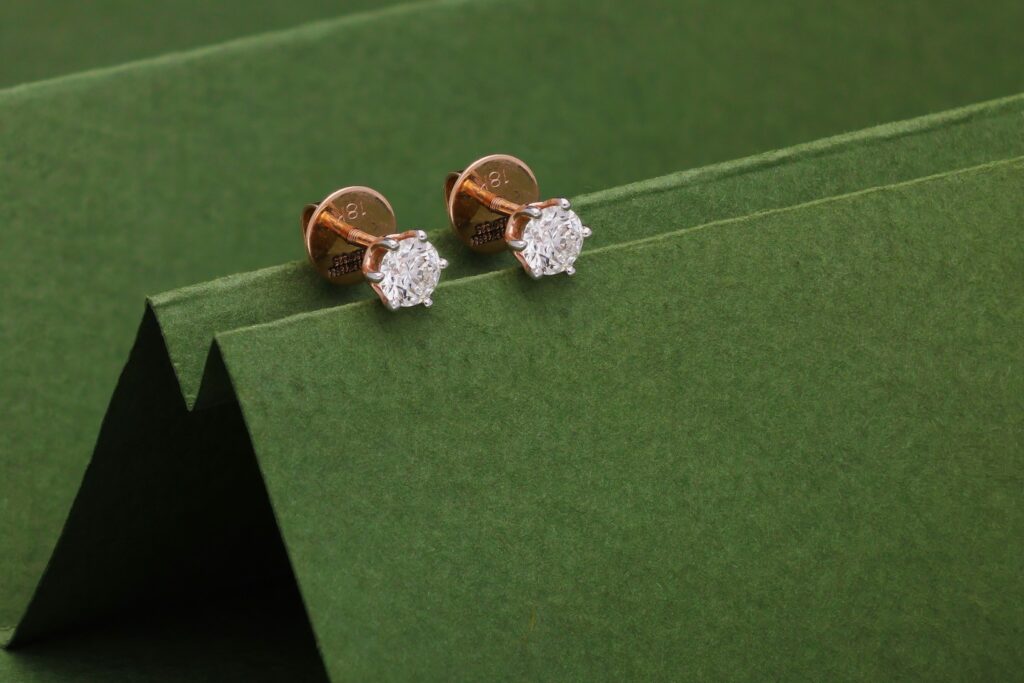
It’s easy to become focused on carat weight when comparing earrings. Size matters, but a great pair of diamond studs needs to get several things right at once.
Make Sure the Diamonds Match
Because the earrings are worn as a pair, consistency is important. The diamonds should complement one another in size, colour and overall appearance. You don’t need two stones with identical grading reports in every respect, but you shouldn’t be able to look at the pair and immediately notice that one appears different from the other.
Consider the Setting
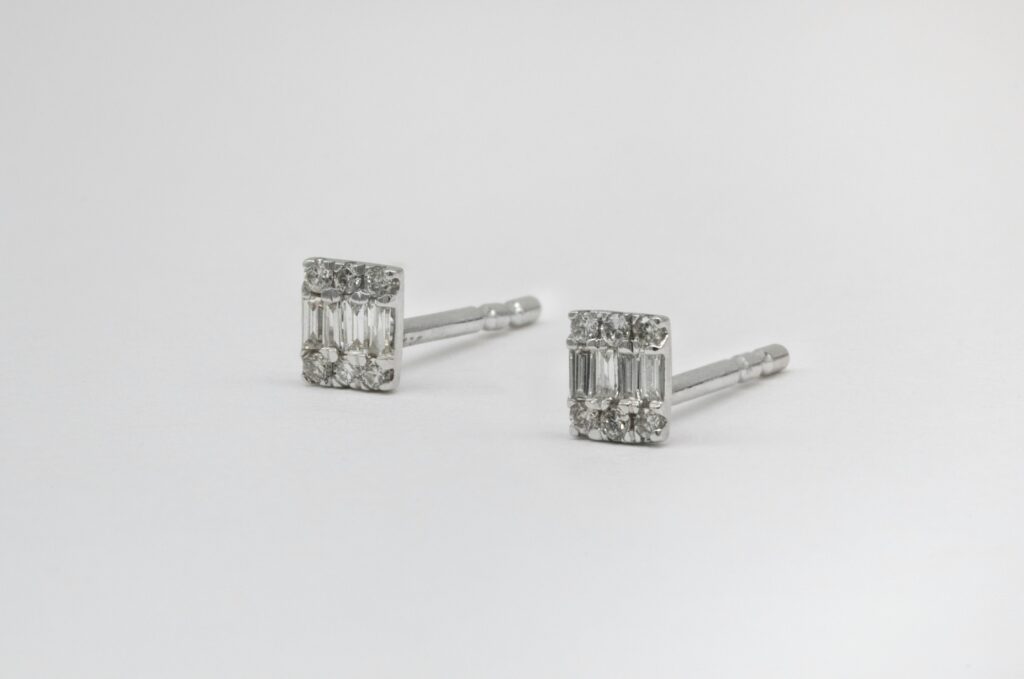
The setting changes both the appearance and practicality of the earrings. A minimal setting can allow more of the diamond to remain visible, while the construction still needs to hold the stone securely. Different setting styles can also influence how prominently the diamond appears when viewed from the front.
Check How the Earrings Fasten
The fastening becomes increasingly important as diamond size increases. Larger stones carry more weight, so the earring needs to sit securely and comfortably against the ear rather than tipping forwards. A well-proportioned setting and suitable fastening can make a substantial pair of studs considerably more comfortable to wear.
Think About the Metal
White metals tend to blend naturally with the appearance of a diamond, while yellow or rose gold can create more contrast.
There’s no right answer here. If you’re buying the earrings to wear regularly, choosing a metal that already features heavily in your jewellery collection can make them much easier to pair with other pieces.
Find Your Diamond Stud Earrings at Trotters Jewellers
At Trotters Jewellers, our collection of diamond earrings focuses predominantly on lab-grown diamond studs, alongside a select range of natural diamond designs.
With different diamond sizes and precious metals available, you can choose anything from understated everyday studs to larger pairs with considerably more presence. Our experienced jewellery team can also help you compare sizes and find the pair that works best for you.
Explore our diamond earrings online or visit our Liverpool Street showroom to compare diamond stud sizes in person.
You can also discover our wider lab-grown diamond jewellery collection, including diamond necklaces and pendants, diamond bracelets and diamond rings.
About the Author
Written by the Trotters Jewellers team, specialists in pre-owned luxury watches and certified diamond jewellery since 1991, based in the City of London.