
 Buy
Buy Sell
Sell Exchange





Jewellery
How to Care for a Diamond Ring
Aug
Diamond rings are made to be worn, but everyday wear inevitably takes its toll. Hand creams, soap and natural oils can dull a diamond’s sparkle, while knocks and pressure can gradually affect the setting that holds it securely in place.
Fortunately, caring for a diamond ring doesn’t need to be complicated. Regular gentle cleaning, knowing when to take your ring off and keeping an eye on the condition of the setting will help protect it for years to come.
This is particularly important when caring for an engagement ring that’s worn every day. In this guide, the Trotters team explains how to clean your diamond ring safely at home, the everyday habits that can help prevent damage and when it’s worth asking a jeweller to take a closer look.
Quick Answer: How Do You Care for a Diamond Ring?
Good diamond ring care comes down to a few simple habits:
- Clean it gently. Warm water, mild washing-up liquid and a very soft brush are suitable for cleaning many diamond rings at home.
- Know when to take it off. Remove your ring before exercising, swimming, cleaning, gardening or doing anything that could put pressure on the band or setting.
- Keep chemicals and beauty products away where possible. Cleaning products can affect precious metals, while creams and cosmetics leave residue that can dull the diamond.
- Store it safely. Keep your ring in a jewellery box, ring box or another dedicated place rather than leaving it loose on a surface.
- Pay attention to the setting. Loose stones, catching claws or changes to the band should be inspected rather than ignored.
- Arrange professional checks when needed. A jeweller can inspect areas of wear that aren’t always obvious at home.
Diamonds are famously hard, but that doesn’t make a diamond ring indestructible. The metal band and the small claws or other components securing the diamond can still bend, scratch and wear over time.
Why Does My Diamond Ring Look Dull?
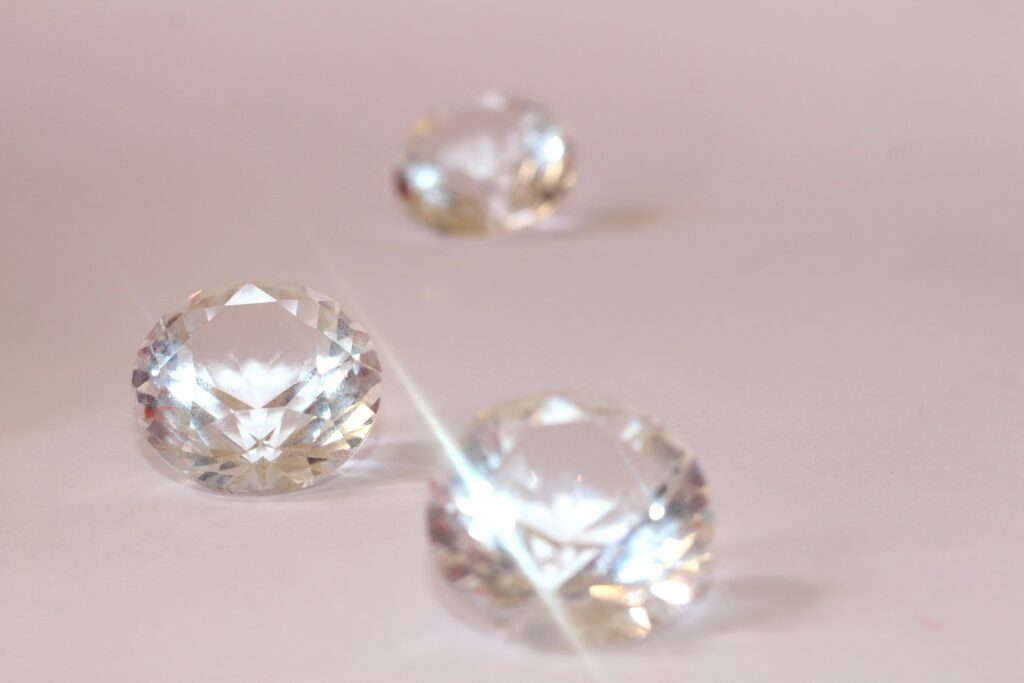
If your diamond has lost some of its sparkle, dirt is often the simplest explanation.
Diamond rings spend a lot of time in contact with your hands, which means natural skin oils, moisturiser, soap, makeup and other everyday products gradually collect around the stone. Even a thin layer of residue can affect how effectively light enters and reflects from the diamond.
The setting can make a difference too. Small spaces beneath and around the diamond are particularly good at collecting dirt and can be difficult to reach during normal hand washing. Regular cleaning removes this build-up and is often all that’s needed to bring back the brightness you remember.
How to Clean a Diamond Ring at Home
You don’t need specialist equipment to clean most straightforward diamond rings. In fact, keeping things simple is usually the safest approach.
What You’ll Need
- A small bowl
- Warm water
- Mild washing-up liquid
- A very soft toothbrush
- A clean, lint-free cloth
- Prepare a Gentle Cleaning Solution
Fill a small bowl with warm water and add a small amount of mild washing-up liquid. There’s no need to use very hot water or a concentrated cleaning solution.
- Soak the Ring
Place the ring in the solution and allow it to soak briefly. This helps soften the oils and residue that can collect around the diamond and setting.
- Gently Clean Around the Diamond
Using a very soft toothbrush, gently work around the diamond, setting and band. Pay particular attention to the underside of the stone and the small spaces around the setting, where dirt tends to accumulate.
Avoid aggressive scrubbing. You’re trying to loosen residue, not polish the metal.
- Rinse Carefully
Rinse away any remaining soap using clean water. Always use a bowl or make sure the plug is securely in place rather than rinsing valuable jewellery over an open drain.
- Dry Your Ring
Gently pat the ring dry with a clean, lint-free cloth and allow any remaining moisture to dry naturally. Once clean, the diamond should appear noticeably brighter as light can once again pass through the stone without a layer of residue getting in the way.
Important: This method is suitable for many standard diamond rings, but not necessarily every piece of jewellery. Antique rings, delicate settings or rings containing other gemstones can have different care requirements. If you’re unsure, professional advice is the safer option.
What Should You Avoid When Cleaning an Engagement Ring?
There’s plenty of jewellery-cleaning advice online, but some commonly suggested methods can do more harm than good.
Toothpaste
Toothpaste is sometimes recommended as a DIY jewellery cleaner because it can remove surface dirt. The problem is that many toothpastes contain abrasive ingredients that can mark or dull precious metals. Stick to a mild cleaning solution instead.
Bleach and Strong Cleaning Products
Household bleach and other harsh chemicals have no place in your jewellery-cleaning routine. They can affect precious metals and potentially damage parts of the ring, particularly with repeated exposure.
Abrasive Cleaners
Scouring products, powders and rough cleaning materials can scratch the surface of the band. A diamond may be extremely resistant to scratching, but the precious metal surrounding it isn’t.
Boiling Water
A diamond doesn’t need extreme heat to become clean. Warm water is sufficient for loosening everyday residue and avoids exposing the ring or any additional stones to unnecessary temperature changes.
Ultrasonic Cleaners Without Checking the Ring First
Ultrasonic machines use vibrations to dislodge dirt from difficult-to-reach areas and can be very effective in the right circumstances. However, they’re not suitable for every piece.
If a claw or stone is already loose, those vibrations could make the problem worse. Delicate, antique or multi-stone rings may also require a different approach, so don’t assume an at-home ultrasonic cleaner is automatically the best option.
Caring for an Engagement Ring Every Day
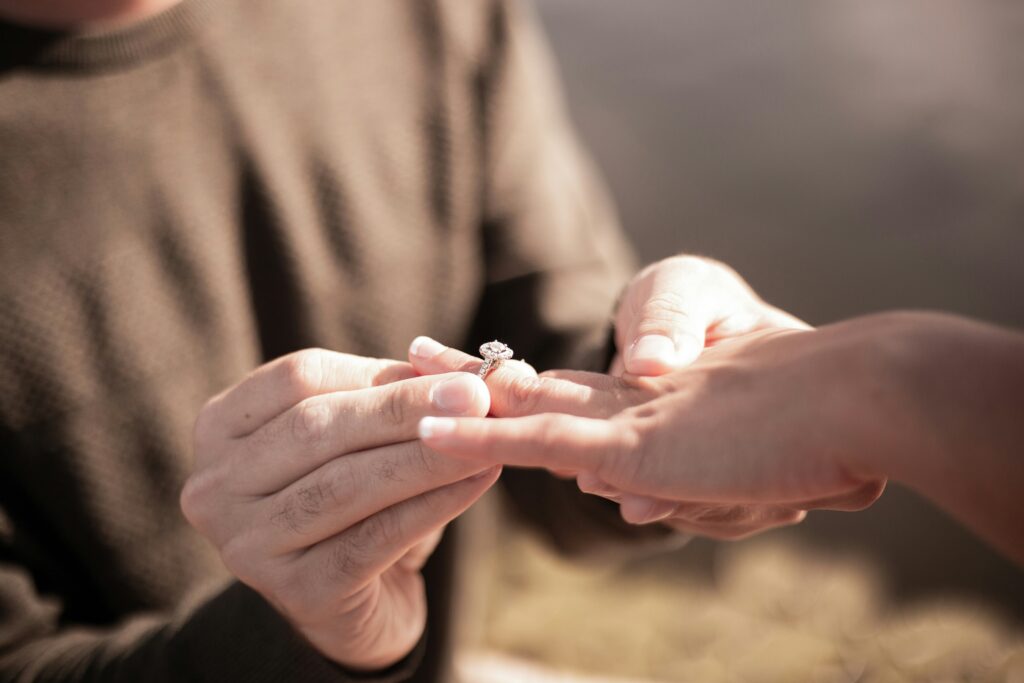
Cleaning is only one part of engagement ring care. Preventing unnecessary wear is just as important. You don’t need to remove your ring every time you use your hands, but there are situations where putting it somewhere safe makes sense.
At the Gym
Take your engagement ring off before lifting weights or using equipment that places pressure on your hands. Metal bands can become scratched, bent or misshapen, and raised or pavé settings can be particularly vulnerable to knocks.
When Cleaning
Remove your ring before using bleach, strong detergents or other household chemicals. Wearing gloves may reduce direct contact, but taking valuable jewellery off completely also protects it from knocks while you’re working.
When Swimming
We recommend leaving your engagement ring somewhere secure before getting into a pool, sea or other open water.
Chlorinated water isn’t ideal for fine jewellery, but loss is the bigger concern. Fingers can temporarily become smaller in cold water, making a ring easier to slip off unnoticed. Losing a ring in the sea or a lake can make recovery extremely difficult.
Gardening and DIY
Soil and dirt can work their way into small spaces around a setting, while tools and hard surfaces create plenty of opportunities to knock or scratch a ring. DIY work can also put considerable pressure on the band.
Showering and Getting Ready
Shampoo, conditioner, soap, moisturiser and other beauty products can gradually leave residue around a diamond. Taking your ring off before showering and putting it on after you’ve finished applying creams and cosmetics can help it stay cleaner for longer.
The important thing isn’t to become overly protective of your engagement ring. It’s simply to recognise the situations where wearing it provides no benefit and creates an unnecessary risk of damage or loss!
Where Should You Keep Your Diamond Ring?
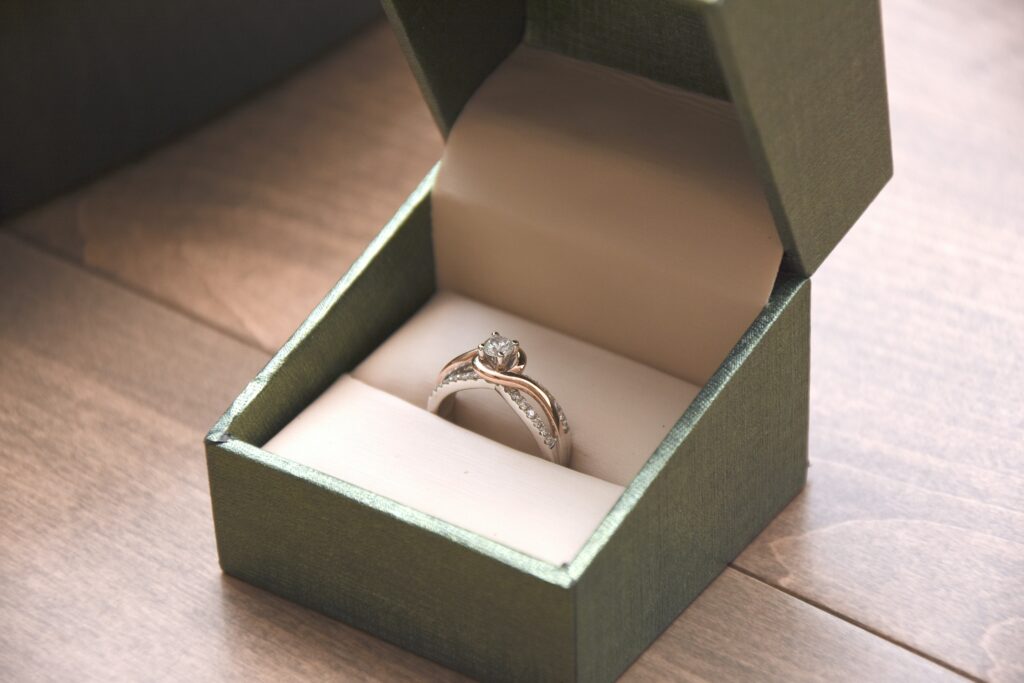
If you regularly take your engagement ring off, having a dedicated place to keep it is one of the simplest ways to avoid losing it.
A lined jewellery box or ring box will protect the ring when it isn’t being worn. A small ring dish can also be useful beside your bed or anywhere else you routinely remove your jewellery, although we’d avoid keeping one next to a sink or anywhere the ring could easily be knocked away.
Diamond jewellery is best stored separately rather than loose alongside other pieces. Diamonds are extremely hard and can scratch precious metals, other gemstones and even other diamonds if they’re allowed to rub against one another.
For the same reason, avoid dropping an engagement ring loose into a handbag or pocket. If you need to remove it while you’re away from home, a small protective jewellery case is a much safer option.
Look After the Setting, Not Just the Diamond
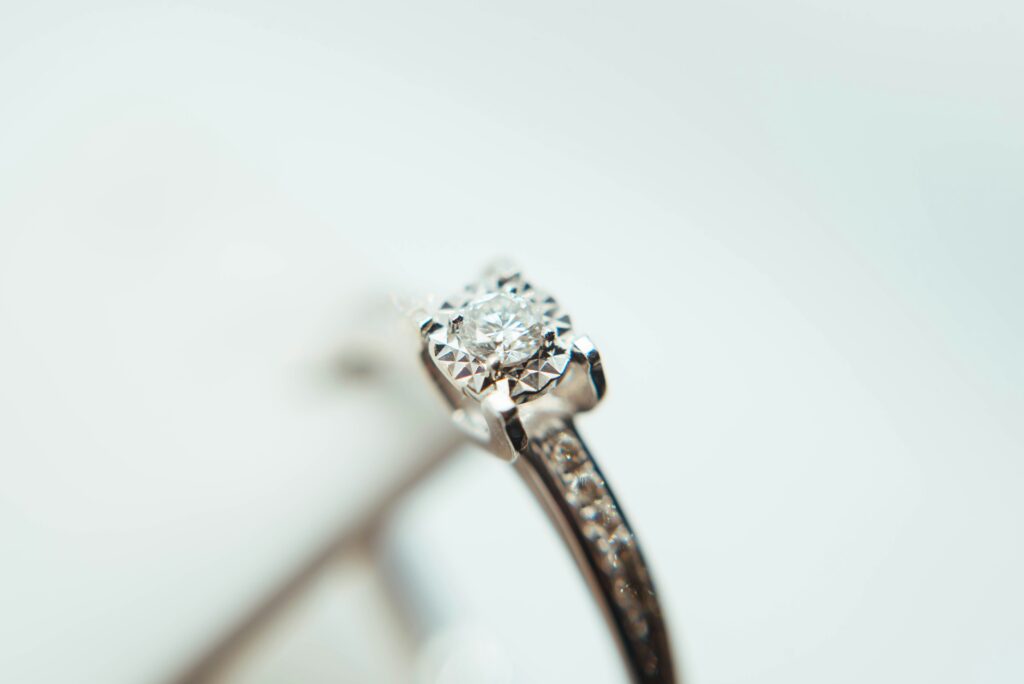
A diamond may be one of the hardest natural materials, but the metal holding it in place isn’t.
Engagement rings are particularly susceptible to wear because they’re often worn every day. Over time, the claws holding the centre diamond can wear down, a setting can be knocked or the band itself can become scratched or misshapen.
Get into the habit of looking at your ring occasionally rather than waiting until something goes wrong. Things worth watching for include:
- A diamond that appears to move in its setting.
- Claws that look uneven, raised or worn.
- A claw that repeatedly catches on clothing.
- Small pavé or accent diamonds that appear loose or missing.
- Visible changes to the shape of the band or setting.
- Damage following a significant knock.
If you suspect a diamond has become loose, don’t keep testing it by moving the stone yourself. Stop wearing the ring and have the setting inspected by a professional jeweller. Catching a worn claw early is considerably easier than trying to find a diamond after it has fallen out!
Does Your Engagement Ring Still Fit Properly?
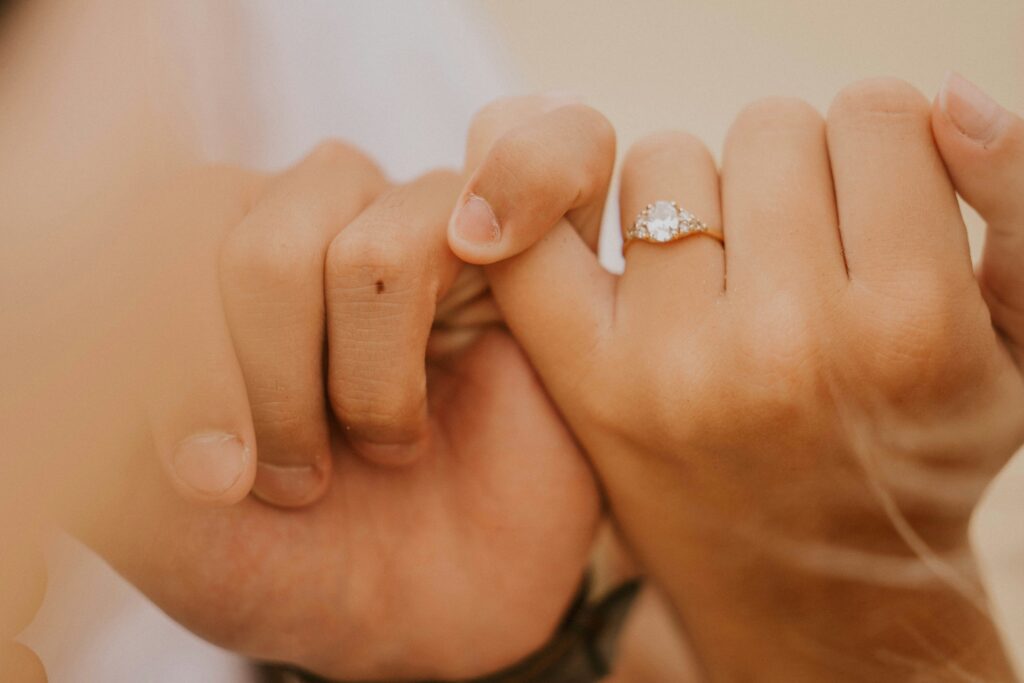
A well-fitting engagement ring should feel secure without being uncomfortable.
Finger size isn’t necessarily constant throughout your life. Temperature can cause temporary changes, while weight fluctuations and other changes over time can mean a ring that once fitted perfectly eventually feels too tight or too loose.
Pay particular attention if your ring has started spinning excessively or feels as though it could slide over your knuckle without much resistance. A loose engagement ring isn’t simply annoying to wear; it’s much easier to lose.
Likewise, don’t continue wearing a ring that has become uncomfortably tight in the hope that it will eventually fit again. If you’re unsure about the fit, our Ring Size Guide explains how ring sizing works and what to consider before having a ring professionally resized.
When Should a Diamond Ring Be Professionally Checked?
There’s a limit to what you can assess at home. Professional inspection allows a jeweller to look closely at the parts of the ring that experience the most wear, particularly the setting and any small components securing the diamonds.
Depending on the design, a check may include looking at:
- The security of the centre diamond.
- Wear to claws or other parts of the setting.
- Pavé and smaller accent stones.
- The condition and shape of the band.
- Any visible damage or areas requiring attention.
There’s no single maintenance schedule that suits every diamond ring. A delicate engagement ring worn every day will experience very different wear from an occasional diamond ring that’s kept safely in a jewellery box for much of the year.
The condition of the ring is more important than simply following the calendar. If something looks different, the ring has taken a significant knock or you’re concerned about the security of a stone, have it inspected rather than waiting for your next planned clean. Professional cleaning can also reach areas that are difficult to access at home and restore the finish of the ring where appropriate.
How to Care for a Lab-Grown Diamond Ring
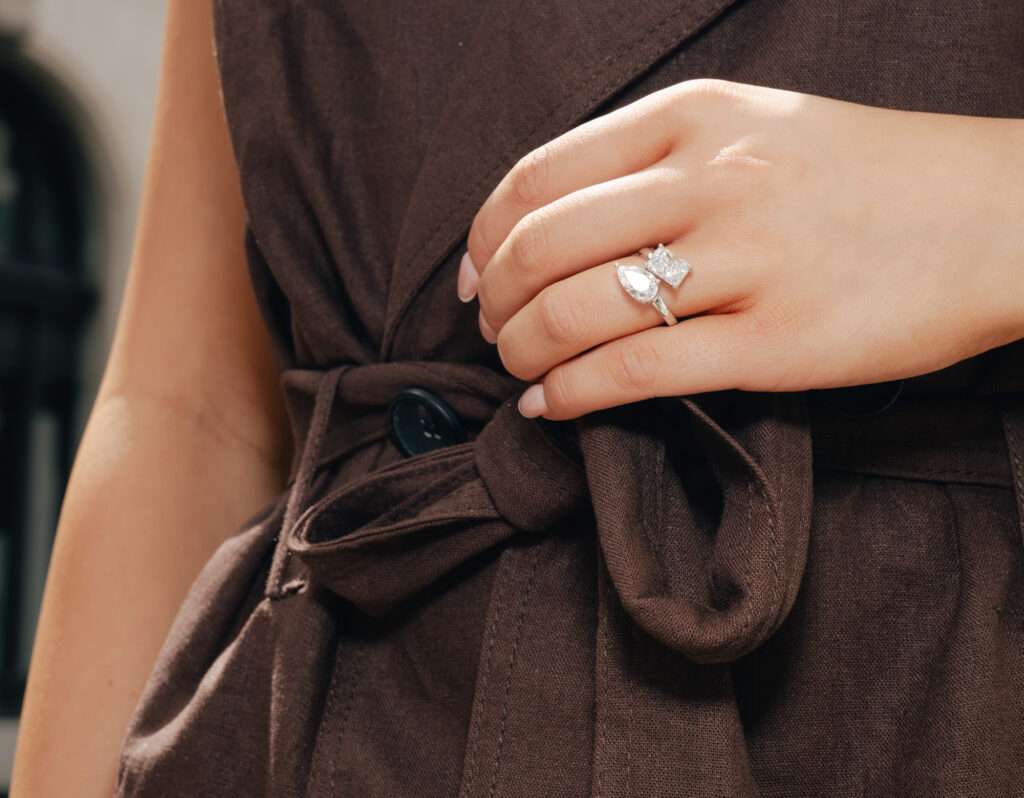
Caring for a lab-grown diamond ring is fundamentally the same as caring for one set with a natural diamond.
Lab-grown diamonds have the same physical and optical properties as natural diamonds, so they don’t require a different cleaning method simply because they were created in a laboratory. For most straightforward designs, warm water, mild washing-up liquid and a very soft brush remain a simple way to remove everyday oils and residue.
The bigger consideration is the ring around the diamond.
Whether your lab-grown diamond is set in platinum, white gold, yellow gold or rose gold, the precious metal can still scratch and show signs of wear. Claws, pavé settings and smaller accent stones should also be checked periodically, particularly on a lab-grown diamond engagement ring that’s worn every day.
The same everyday rules therefore apply: remove your ring when there’s a realistic chance of knocking, bending or losing it, keep harsh chemicals away from the setting and store it safely when it isn’t being worn.
Explore our collection of lab-grown diamond rings and wider lab-grown diamond jewellery range to discover more IGI-certified designs at Trotters Jewellers.
A Diamond Ring Is Made to Be Worn
Looking after a valuable ring shouldn’t mean being afraid to wear it.
A good engagement ring is designed to become part of everyday life, and small scratches and signs of wear can naturally develop along the way. The aim of good diamond ring care isn’t to keep a ring untouched; it’s to avoid preventable damage and spot genuine maintenance issues before they become bigger problems.
Keep it clean, remove it when an activity puts it at unnecessary risk and pay attention to the condition of the setting. Those few habits will do far more for the long-term condition of your ring than constantly worrying about every small mark.
Explore Diamond Rings at Trotters Jewellers
At Trotters Jewellers, our diamond ring collection brings together both natural and lab-grown diamond rings, from timeless designs to rings chosen for engagements and life’s biggest milestones.
Our lab-grown diamonds are independently certified by the International Gemological Institute (IGI), while our experienced jewellery team can help with everything from choosing the right diamond and setting to finding the correct ring size.
Explore our diamond rings online or visit our Liverpool Street showroom to see the collection in person. You can also discover our wider diamond jewellery collection, including diamond necklaces and pendants, diamond bracelets and diamond earrings.
About the Author
Written by the Trotters Jewellers team, specialists in pre-owned luxury watches and certified diamond jewellery since 1991, based in the City of London.