 Buy
Buy Sell
Sell Exchange




Rolex
How to Spot a Fake Rolex: A Complete Guide
Jun
Few luxury watches are copied more frequently than Rolex.
As demand for pre-owned Rolex watches continues to grow, so too does the sophistication of counterfeit watches. While some fakes are immediately obvious, others can be surprisingly convincing, particularly in online listings where buyers only have photographs to rely on.
The good news is that many counterfeit watches still reveal themselves through small details. Knowing what to look for can help you identify warning signs before making a purchase.
At Trotters Jewellers, we handle pre-owned Rolex watches every day. In this guide, we’ll explain the most common signs of a fake Rolex, the mistakes buyers often make and why buying from a trusted specialist remains the safest approach.
Quick Checklist: Signs a Rolex May Not Be Genuine
Before diving deeper, look out for these common warning signs:
- The price seems unusually low
- Poor-quality photographs or limited images
- Incorrect fonts or dial printing
- Misaligned date magnification
- Unusual case proportions
- Missing or inconsistent paperwork
- Seller unwilling to answer questions
- No warranty or authentication process
A single issue doesn’t automatically mean a watch is fake, but several together should prompt further investigation.
Why Spotting a Fake Rolex Has Become More Difficult
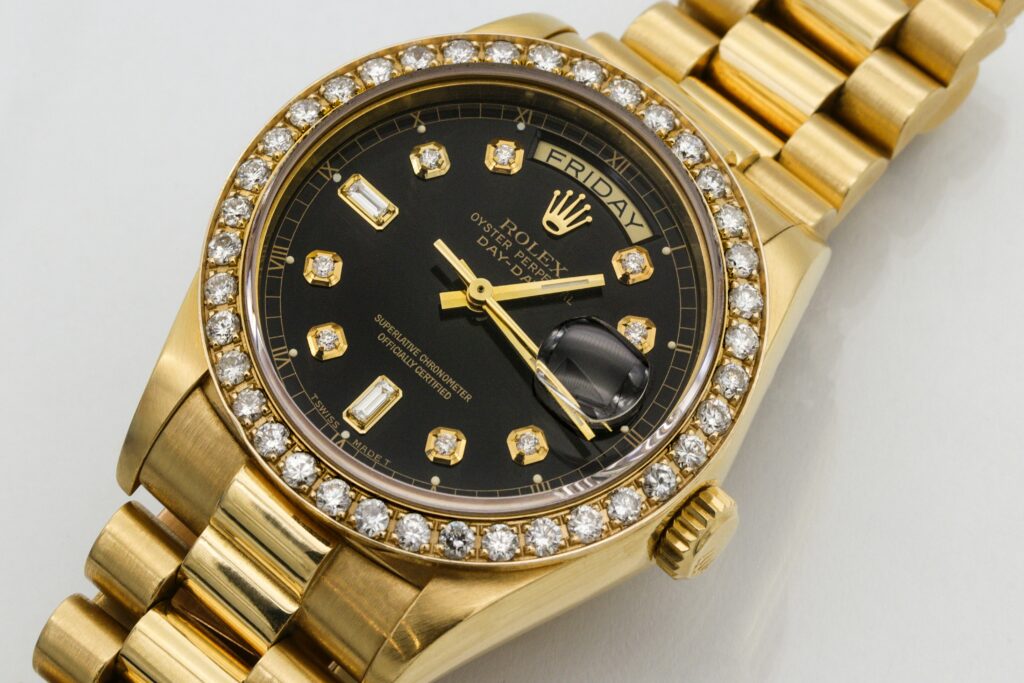
Twenty years ago, many fake Rolex watches could be identified in seconds. Today’s counterfeit market looks very different. Modern replicas benefit from better manufacturing techniques, improved materials and access to detailed information about genuine watches. Some can appear convincing in photographs and even during casual inspection.
This is why authentication should never rely on a single detail. Genuine Rolex watches are defined by the quality and consistency of the entire watch rather than one specific feature.
Trotters Top Tip: If someone claims there’s a single “secret” way to identify a fake Rolex, be cautious. Authentication is usually based on multiple factors rather than one obvious clue.
Start With the Seller
Before inspecting the watch itself, consider who is selling it. In our experience, the seller often provides the first indication of whether a transaction deserves further scrutiny. A trustworthy seller should be transparent about the watch’s history, condition and provenance.
Questions Worth Asking:
- How long have they owned the watch?
- Do they have service records?
- Has the watch been authenticated?
- Is it covered by a warranty?
- Can they provide additional photographs?
- Are they willing to answer detailed questions?
A genuine seller should be comfortable discussing the watch and providing further information where appropriate.
Examine the Dial Carefully
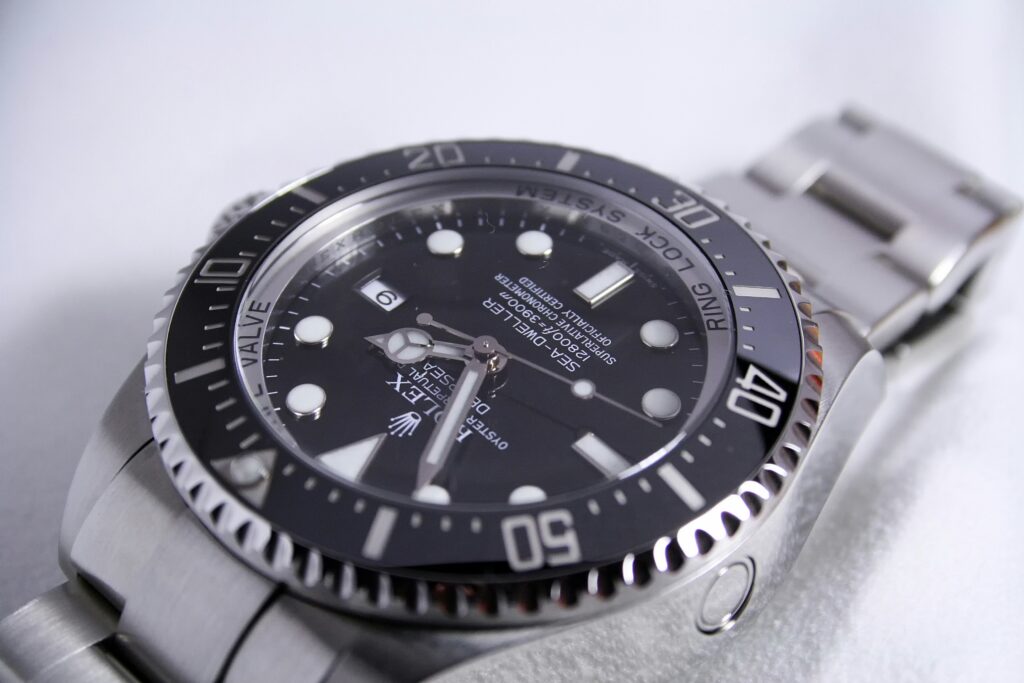
The dial is one of the most revealing areas of any Rolex and Rolex is known for exceptional attention to detail, which means poor finishing often becomes more noticeable here than anywhere else.
Look for Consistency
Pay close attention to:
- Printing quality
- Font consistency
- Marker alignment
- Spacing between text elements
- Lume application
Everything should appear crisp, balanced and precise.
Check the Hands and Markers
The hands and hour markers should feel consistent with the overall quality of the watch. Misaligned markers, uneven lume or poorly finished hands can all indicate problems.
Watch for Moisture Damage
Even genuine Rolex watches can suffer damage over time. Signs of moisture, spotting or discolouration should prompt further questions about servicing and condition.
Be Careful With Refinished Dials
A refinished dial isn’t necessarily a sign of a fake watch, but it should always be disclosed. Collectors often place significant value on originality, and refinished dials can affect both desirability and resale appeal.
Trotters Top Tip: When reviewing online photographs, zoom in on the dial. It’s often where the most important clues can be found.
Check the Cyclops Lens
One of Rolex’s most recognisable features is the Cyclops lens positioned above the date window. On genuine Rolex watches, the magnification should be strong, clear and easy to read. On many counterfeit watches, the date appears too small, poorly positioned or lacks the expected level of magnification. While this isn’t a foolproof test, it remains one of the quickest visual checks buyers can perform.
Assess the Case and Bracelet
A Rolex should feel substantial, precise and exceptionally well finished. Many counterfeit watches struggle to replicate the subtle details that contribute to the overall feel of a genuine Rolex.
Pay Attention To:
- Case finishing
- Lug shape
- Bracelet quality
- Clasp operation
- Overall proportions
If you’re familiar with our guide on How to Check a Watch’s Condition Before Buying, many of the same principles apply here. A genuine Rolex should feel cohesive. The case, bracelet and clasp should all display the same attention to detail and consistency.
Serial Numbers and Reference Numbers
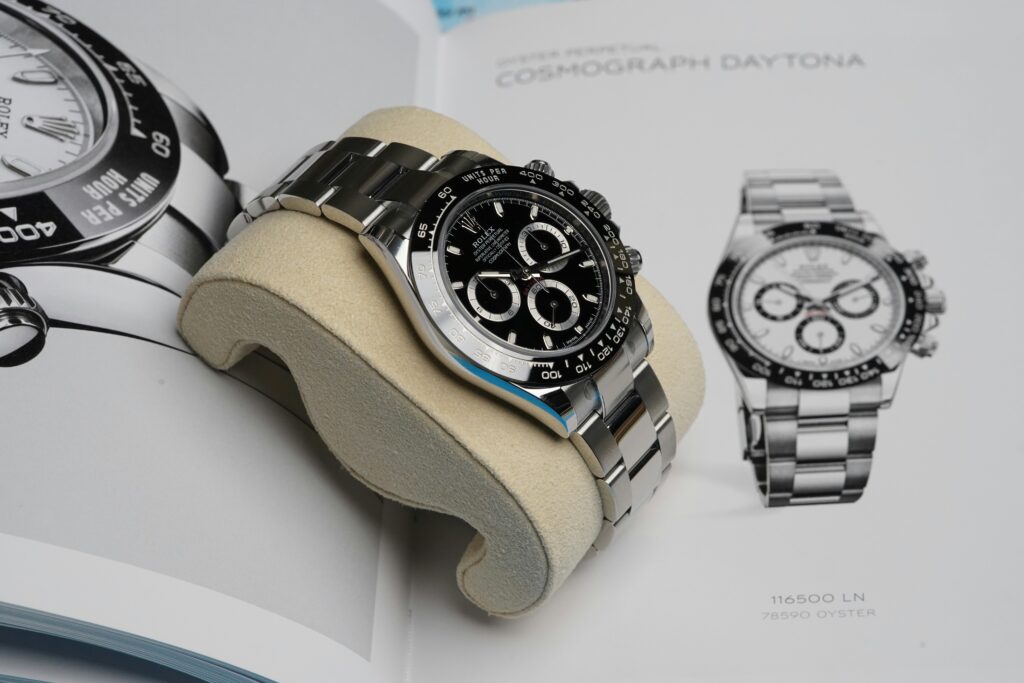
Every Rolex leaves the factory with identifying reference and serial information, and these details can tell you a surprising amount about the watch. The reference number identifies the model, while the serial number helps establish its production period. In theory, these numbers can be used to verify whether a watch is consistent with the model being presented.
However, modern counterfeiters understand this too.
Many high-quality replicas now feature copied or fabricated serial numbers, meaning their presence alone should never be treated as proof of authenticity. What matters is whether those numbers are correctly engraved, appropriate for the watch and consistent with the rest of the piece. For example, if a seller presents a watch as a particular Rolex reference but the dial, bezel or bracelet configuration doesn’t match what Rolex originally produced, that should immediately prompt further investigation.
Trotters Top Tip: Always assess serial numbers as part of a wider picture. Genuine watches are defined by overall consistency, not a single engraving.
Don’t Rely on Box and Papers Alone
One of the biggest misconceptions in the pre-owned Rolex market is that original box and papers automatically guarantee authenticity. Unfortunately, counterfeit paperwork exists, and fake watches are sometimes sold alongside convincing documentation.
Box and papers should be viewed as supporting evidence rather than definitive proof.
Box & Papers: Quick Guide
| Buyer Type | How Important Are They? |
| First-Time Buyer | Helpful, but condition and authenticity should remain the priority |
| Everyday Wearer | Nice to have, but rarely essential |
| Collector | Often more important, particularly on sought-after references |
| Investment-Focused Buyer | Can contribute to long-term desirability and resale appeal |
A complete set is always desirable, but it should never replace proper authentication.
The Most Common Fake Rolex Scenarios We See
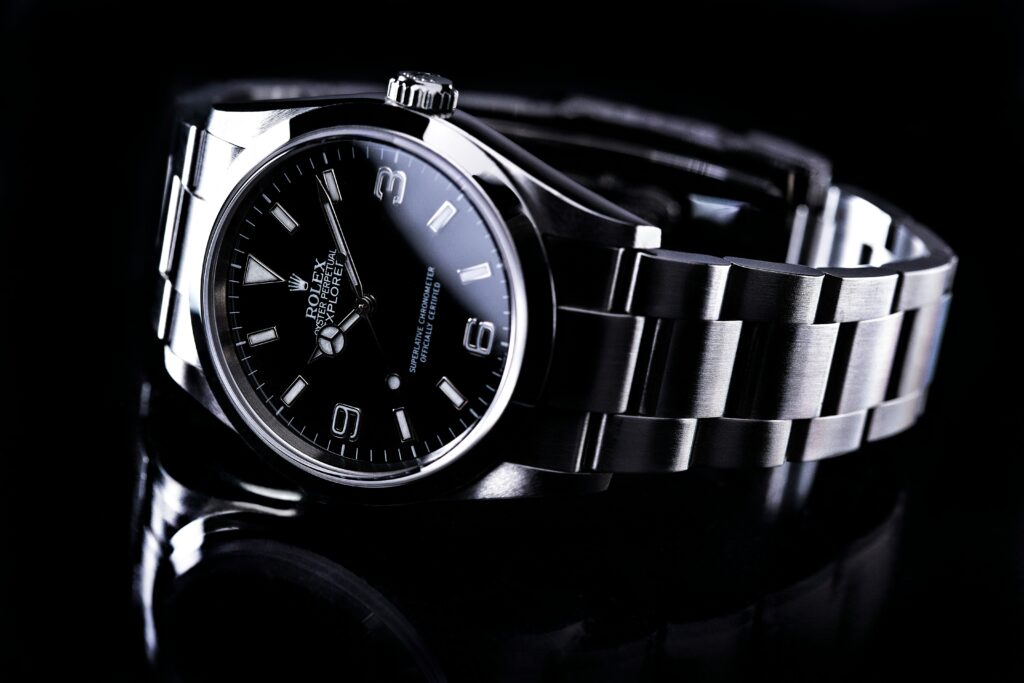
Counterfeit Rolex watches don’t always appear in the ways buyers expect, while some are obvious copies, others are presented much more convincingly.
The Bargain That Looks Too Good to Be True
A watch priced significantly below market value remains one of the oldest warning signs in the book. Luxury watches are widely researched, and sellers generally understand what their watch is worth. While good deals do exist, unusually low pricing should always prompt additional questions.
The Watch With Perfect Photographs But No Detail
Professional-looking images can create a false sense of confidence. If close-ups of the dial, clasp, case sides and serial information are missing, ask why.
The Seller Who Rushes the Transaction
Pressure to complete a deal quickly should always raise concerns. A genuine seller should be comfortable allowing buyers time to ask questions and carry out reasonable checks.
Buying Online? Here’s What To Ask For
Online marketplaces have made luxury watches more accessible than ever, but they also require buyers to be more diligent. Before committing to a purchase, consider asking for:
Additional Photographs
Request close-ups of:
- The dial
- Bracelet
- Clasp
- Case sides
- Lugs
- Serial and reference information where appropriate
Timekeeping Information
Understanding how the watch is currently performing can provide valuable insight into its condition.
Service Information
Ask whether the watch has been serviced or inspected recently.
Condition Reports
A reputable seller should be able to provide a detailed condition report rather than relying solely on photographs.
Warranty Details
A warranty demonstrates confidence in the watch being sold and can provide additional reassurance for buyers.
Common Myths About Fake Rolex Watches
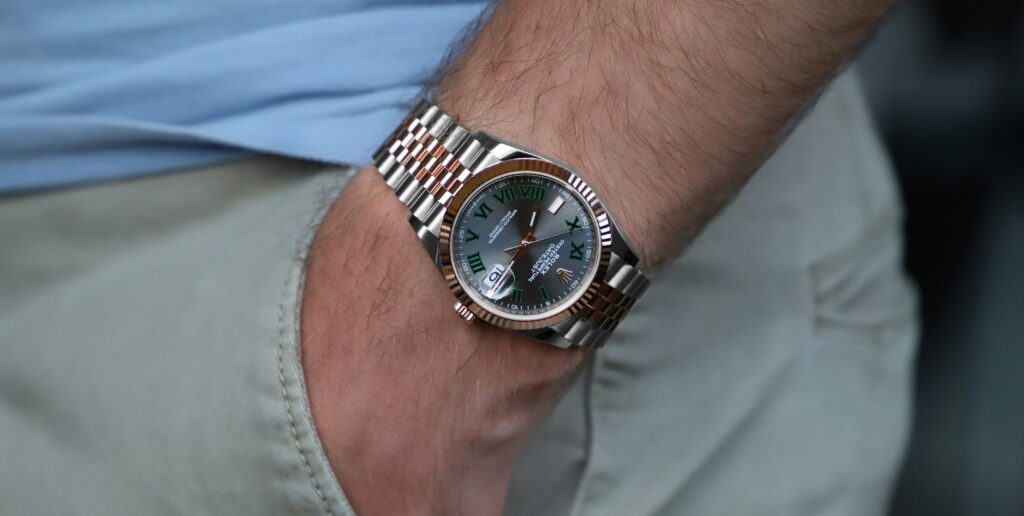
The world of counterfeit luxury watches is full of misconceptions, many of which can leave buyers with a false sense of confidence. While some warning signs remain useful, there are very few shortcuts when it comes to authenticating a Rolex. Understanding some of the most common myths can help you approach the buying process more realistically.
“A Heavy Watch Must Be Genuine”
For years, buyers were told that weight was one of the easiest ways to identify a fake Rolex. That may have been true of lower-quality counterfeit watches in the past, but modern replicas have become far more sophisticated. Many now use solid metal components and can feel surprisingly substantial in the hand.
Weight alone cannot confirm authenticity. A watch should always be assessed as a complete package, taking into account the case, bracelet, dial, movement and overall quality of construction.
“It Has Box and Papers, So It’s Real”
Original box and papers are certainly desirable, but they should never be treated as proof of authenticity. Counterfeit documentation has become increasingly convincing, and it is not uncommon to see fake watches sold alongside replica warranty cards, manuals and packaging. In some cases, genuine paperwork may even become separated from the original watch and later paired with a different piece.
Box and papers should support a watch’s provenance, not replace a proper authentication process.
“The Movement Looks Correct”
Many buyers assume that checking the movement will immediately reveal whether a watch is genuine, the reality is often more complicated.
Most buyers will never see the movement before purchasing, particularly when buying online. Even when the caseback is removed, modern counterfeit watches can contain mechanical movements that appear convincing to the untrained eye. Movement verification is an important part of authentication, but it requires knowledge, experience and often specialist equipment. It’s rarely something that can be accurately judged from a photograph alone.
“The Seller Said It Was Authenticated”
Authentication is only as reliable as the person carrying it out. If a seller claims a watch has been authenticated, it’s worth asking who performed the inspection and what process was followed. A vague statement that a watch has been “checked” or “verified” provides very little reassurance on its own.
Reputable specialists should be able to explain how authenticity was assessed and what checks were carried out before the watch was offered for sale.
“I Compared It to Photos Online and It Looks the Same”
This is one of the most common mistakes buyers make. Modern counterfeiters have access to detailed photographs, measurements and specifications, allowing them to reproduce many of the visual characteristics of genuine Rolex models with impressive accuracy.
A watch may appear correct when compared to images online while still containing incorrect components, replacement parts or subtle inconsistencies that only become obvious during a hands-on inspection.
“If It Feels High Quality, It Must Be Genuine”
Some counterfeit Rolex watches are genuinely well made. While poor finishing, rough edges and obvious flaws can still indicate a fake, high-quality construction alone is not enough to prove authenticity. Some of the most convincing replicas are specifically designed to create a strong first impression.
This is why experienced buyers rarely rely on feel alone. Authenticity comes from consistency across the entire watch, not a single positive characteristic.
What We Look For at Trotters
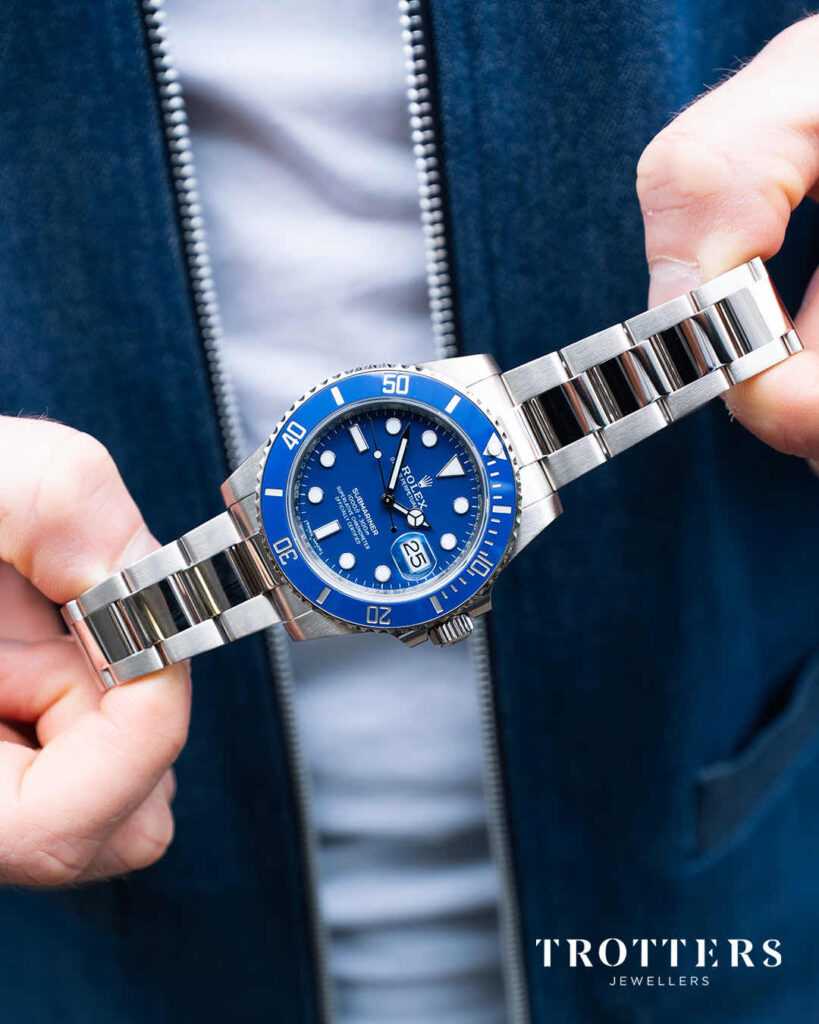
One of the biggest misconceptions about Rolex authentication is that it comes down to spotting a single flaw. In reality, genuine authentication is a process of verification.
When a Rolex enters our collection, we don’t simply examine one aspect of the watch. We assess how every component works together and whether the watch is consistent with what Rolex originally produced.
This includes:
- Case construction and finishing
- Bracelet and clasp details
- Dial printing and marker alignment
- Movement verification
- Serial and reference consistency
- Signs of replacement or aftermarket parts
- Overall condition and originality
It’s this wider assessment that helps build confidence in a watch’s authenticity and allows us to provide accurate descriptions to buyers.
Why Rolex Authentication Matters More Than Ever
The reality is that counterfeit watches have never been more convincing. Many buyers still imagine fake Rolex watches as poorly made copies with obvious flaws. While those watches certainly exist, today’s higher-quality replicas can appear surprisingly convincing to the untrained eye.
That’s why authentication should never rely on a single photograph, a serial number or a seller’s description. The most reliable protection comes from understanding the warning signs, asking the right questions and purchasing through reputable specialists who have the expertise to assess a watch properly. Learning what to look for will always help, but knowing where to buy can be just as important!
Buy a Rolex With Confidence at Trotters
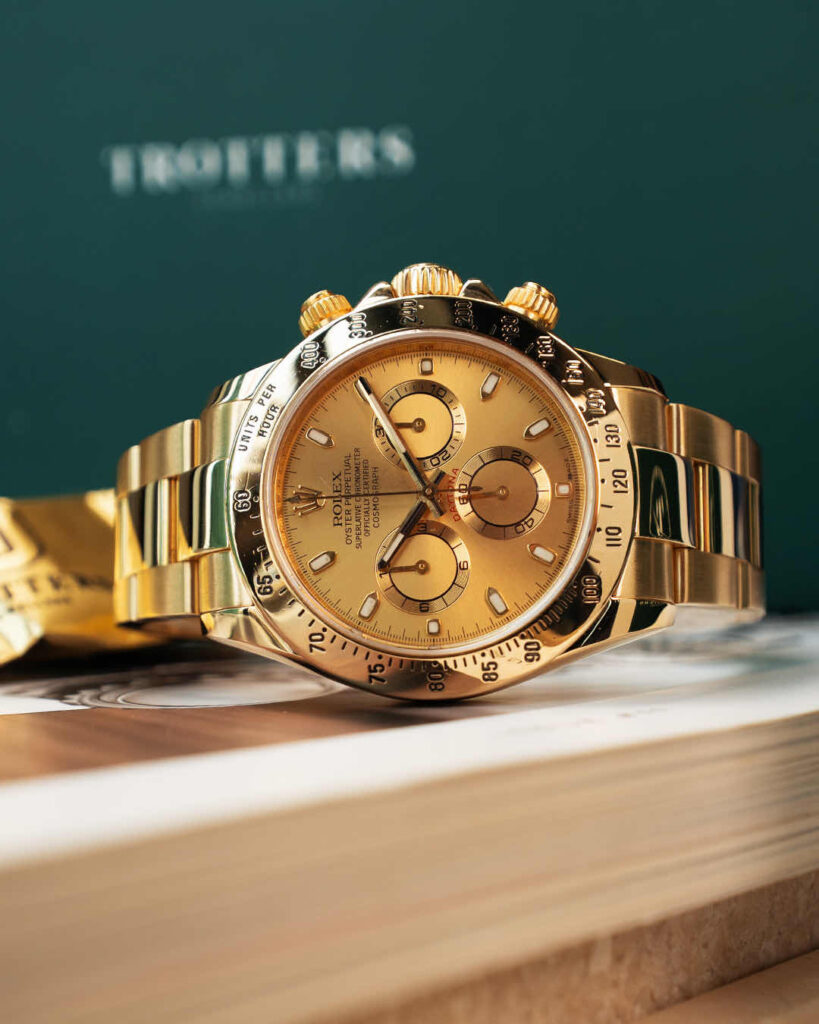
Spotting a fake Rolex is not always straightforward, particularly as counterfeit watches continue to become more sophisticated. While understanding the warning signs can help you avoid common mistakes, the most important lesson is that authenticity should never be judged on a single feature. Genuine Rolex watches are defined by the quality, consistency and attention to detail found throughout the entire watch.
At Trotters Jewellers, every Rolex we offer is carefully inspected and authenticated before being listed for sale. Whether you’re purchasing your first luxury watch or adding to an established collection, our aim is to provide the confidence and transparency needed to buy with certainty. Explore our collection of pre-owned Rolex watches or visit our Liverpool Street showroom to speak with our team.
Related Rolex Guides
How to Check a Watch’s Condition Before Buying
What to Look for When Buying a Pre-Owned Watch
How Often Should You Service a Rolex Watch?
Rolex Models Explained: Submariner, Datejust & GMT-Master
What do Box and Papers Mean When Buying a Rolex?
About the Author: Written by the Trotters Jewellers team, specialists in pre-owned luxury watches and certified diamond jewellery since 1991, based in the City of London.